

Live tracker
What’s being built in Grand Bahama, and when.
Completed work comes first. Every item shows where it stands, who is building it, when it started and where the information comes from.
The tracker
Every tracked item
Loading the tracker…
Drafts, visible to editors only ()
That’s every tracked item.
Something missing, or more urgent? Say what should be fixed first.
Our rules
How this tracker works
- 01Every item carries a date, a place and a source.
- 02Nothing is marked completed until it is open or finished.
- 03Delays stay on the page. A paused item keeps its place, with the reason.
- 04Where jobs are reported, we count how many go to Grand Bahamians.
What the tracker shows for every major project
- A project owner
- The capital required
- A financing model
- An approvals pathway
- A delivery deadline
- Its dependencies
- An economic impact assessment
- A measure of success
Once the new framework is in place, the Government intends to publish a yearly State of Grand Bahama Report on the economy, infrastructure and investment.
Have your say
What should be fixed first?
Choose up to three. Results update for everyone, and you can change your answer at any time.
What residents are saying
0 responses
Results appear as people respond.
Grand Bahama: A Framework for Stability and Growth
One island, one economy, six engines. The Government’s plan for one transparent and equal set of rules across Grand Bahama, in three phases from 2027 to 2040.
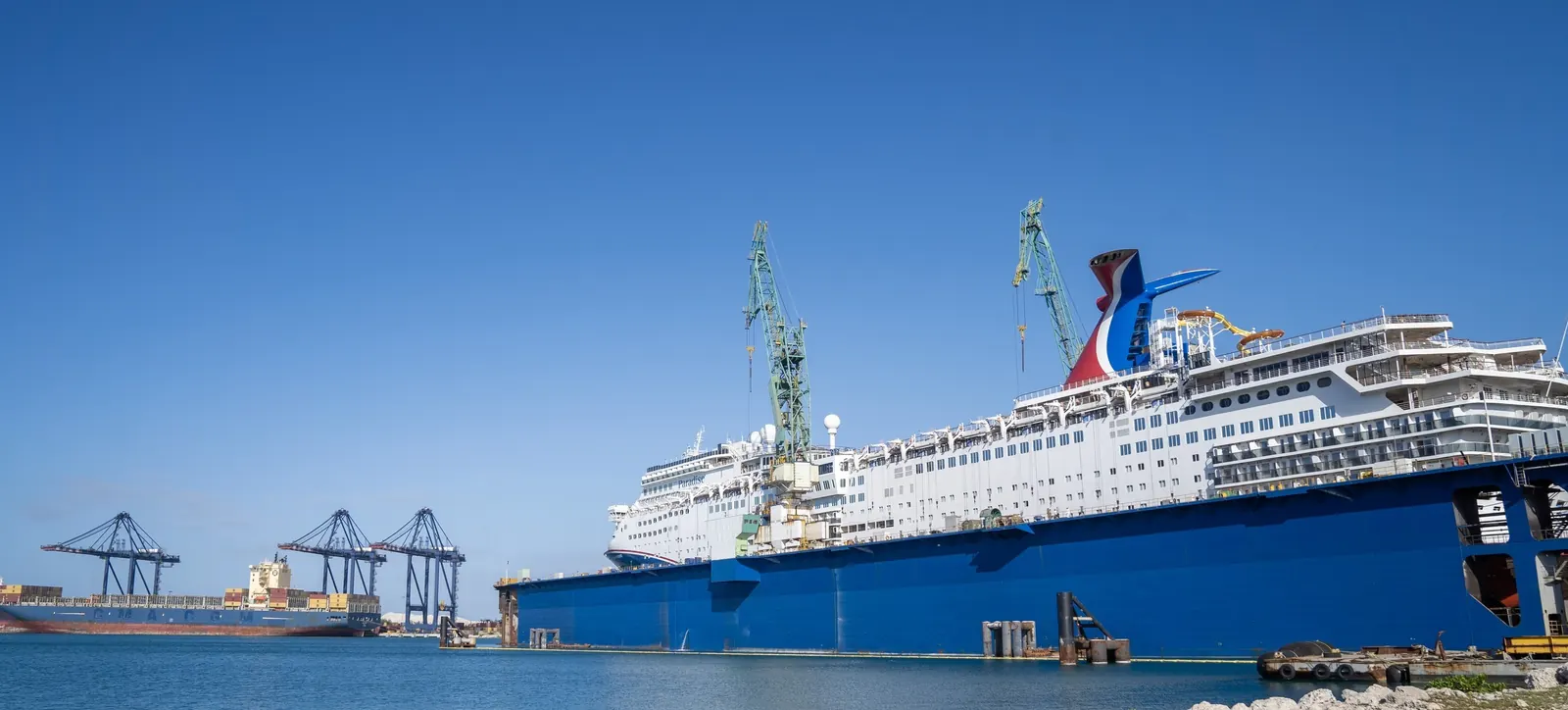 ProgressEvery major project, trackedWhere each one stands, who is building it and the source.Open the tracker
The Green Paper51 questions for Grand BahamaConsultation from 1 November 2026 to 30 April 2027.Read the questions
Have your sayWhat should be fixed first?Choose up to three. Results update for everyone.Answer the poll
The 2026 tribunal awardWhat the tribunal decidedEleven questions, each with the tribunal’s answer.See the answers
Grand Bahama today, in numbers
- 46,740people at the 2022 census, down 9% from 51,368 in 2010
- B$1.81 billioneconomic output in 2024, 11.4% of the national total, and still 7.5% below 2021
- 8.7%unemployment in late 2025, down from 12.8% in January. For women it was 14.1% in January, for men 11.6%
- 22,127homes at the 2022 census, with about one in five empty at the time. 64% of occupied homes are owned by the people living in them
- 1.09 millionforeign visitor entries in 2025, nearly double 2024. Visitors staying overnight fell 17%, to 101,077
- B$268.5 millionof building projects given permits in 2024, up from B$66.8 million in 2021
Source: the Green Paper, chapter 2, from the Bahamas National Statistical Institute, the Central Bank and the Ministry of Tourism. Census counts are not an estimate of today’s population. Entries and overnight visitors are counted differently and can’t be added together.
Today, Grand Bahama works as three separate economies.
One Grand Bahama.
The plan develops the island as one economy and one national development region, with Freeport as its commercial, maritime and industrial centre.
Six engines that reinforce each other instead of competing.
The road to 2040, set to last beyond any single election cycle.
Phase I, 2027 to 2031
ReinventionThe phases are the long-term vision. The Green Paper sets the first steps: consultation to April 2027, a White Paper in July 2027 and a new law in 2028.
Five commitments
- One set of rules for the whole island.
Transparent and equal governance and regulation across Grand Bahama is the Government’s main aim.
- One Grand Bahama.
Freeport, East and West Grand Bahama and surrounding cays treated as connected parts of one economy.
- Freeport stays the centre.
The aim is not to diminish Freeport, but to make sure its success helps the whole island.
- The Hawksbill Creek Agreement will be reformed.
Its part in building Freeport is recognised, but the Government considers it has outlived its usefulness.
- Certainty.
Reform that is deliberate, consultative and lawful. Rights respected, nothing retrospective, clear transition and no break in essential services.
The Green Paper
Grand Bahama: A Framework for Stability and Growth
The Government’s proposals for one transparent and equal set of rules across Grand Bahama, put to the public for six months from 1 November 2026 to 30 April 2027.
Four connected proposals
A proposed Grand Bahama Development Council
Advisory to begin with. Who chairs it, who sits on it and whether it continues are open for consultation. Members could come from Freeport, East and West Grand Bahama and surrounding cays, and include Government, local government, the Port Authority and licensees, labour, businesses, young people, community and environmental groups.
A review of the Hawksbill Creek Agreement
Led by the Attorney General’s Office. It will weigh amending the Agreement, repealing it, or replacing it with a new framework, alone or in combination.
A White Paper, targeted for 1 July 2027
The Government’s decisions after the consultation, the reasons for them, and the laws and steps needed to carry them out.
A Grand Bahama Development Act
The law that puts the chosen framework in place, with an island-wide development strategy and concessions for investment across the island, possibly enhanced outside Freeport.
The consultation
Open from 1 November 2026 to 30 April 2027.
The Green Paper, Grand Bahama: A Framework for Stability and Growth, sets out the Government’s proposals and asks 51 questions. The aim is settled: transparent and equal governance and regulation across the whole island. How to get there is open, and the Government wants to hear from residents, workers, businesses, licensees, the Port Authority, local government and community groups.
A temporary Consultation Steering Committee, appointed by Cabinet, will hold meetings in Freeport, East and West Grand Bahama and surrounding cays, gather responses and report to Cabinet. It cannot grant concessions, change the Agreement or decide permissions.
How to respond
The website, email and postal addresses, and places in Freeport, East and West Grand Bahama and surrounding cays to collect a copy and hand in a response, will be published here before the consultation opens. Responses must arrive by 30 April 2027. They are weighed on what they say, not on how many people send the same view.
The poll on this site is a quick sounding, not a formal response to the Green Paper.
The timetable
- 1 Nov 2026 to 30 Apr 2027Consultation
- May to June 2027Recommendations to Cabinet
- 1 July 2027White Paper: the Government’s decisions and reasons
- 31 December 2027Draft law ready
- Early 2028Law passed, then budgeted for 2028/29
What reform should deliver
- Investment and jobs across the whole island
- Faster economic stability in East and West Grand Bahama and surrounding cays
- Better public services
- Clear accountability for development decisions
- Resilience, economic and climate
The questions
The facts about Grand BahamaChapter 2, 4 questions
- What other evidence matters? Please give the period, place and source.
- Which overlapping responsibilities between bodies most need examining?
- What evidence would explain differences in access between Freeport, East and West Grand Bahama and surrounding cays?
- How should maps and administrative information be shown accurately?
Jobs, business and Bahamian participationChapter 3, 8 questions
- Which changes would best link today’s businesses to new opportunities across the island?
- For a new kind of business, what would help create a market that doesn’t exist yet, and what evidence supports it?
- What would help Bahamian firms, including those outside Freeport, supply the port, logistics and manufacturing?
- How can more visitor spending reach Bahamians while protecting communities, the environment and public access?
- Which aviation and technology activities are worth developing, and what would they need?
- What is needed to grow marine businesses while protecting existing livelihoods?
- What changes to training, Government buying and hiring would build lasting Bahamian ownership and careers?
- How should island-wide incentives, including possibly stronger ones outside Freeport, spread opportunity?
Services, infrastructure and communitiesChapter 4, 8 questions
- Where do split or overlapping responsibilities make services hard to get, and how can that be made clear?
- What electricity standards, customer protections and oversight would make power reliable and affordable, and support the move to cleaner energy?
- What changes to transport would better connect settlements, jobs, services and markets?
- How should water, sewage, drainage and garbage be coordinated for different settlements and households?
- What would secure usable internet and easy access to Government services, including during outages?
- How can rules for land and housing be clearer while protecting affordability and public access?
- What facilities, outreach and transport would improve services for smaller settlements and people needing extra help?
- What arrangements would strengthen environmental protection, storm and emergency readiness, and accountability for services?
The Development CouncilChapter 5, 6 questions
- Which advisory tasks would add most value, kept separate from decisions made by existing bodies?
- How should members be chosen to balance representation across the island with the right expertise?
- Who should chair it: a Minister, an independent chair with a Ministerial sponsor, or a chair and deputy?
- What rules are needed on conflicts of interest, confidentiality, publication and recording disagreement?
- What staff support and ways of taking part would let it finish its first task on time?
- What lasting role, if any, would justify keeping the Council afterwards, and on what legal basis?
Reforming the Hawksbill Creek AgreementChapter 6, 6 questions
- Which public functions need clearer law, a new owner or stronger accountability? Please say who does it now and what should change.
- Which route works best: targeted amendment, repeal, a full replacement, or a combination?
- Which existing licences, approvals, concessions and contracts need protecting during the change, and how?
- How should service duties and standards, and each body’s responsibilities, be set out, enforced and published?
- What separation, disclosure and review rules are needed where business interests and public decisions meet?
- What must be in place before changes start, so services continue and pending cases are handled?
The Grand Bahama Development ActChapter 7, 7 questions
- What belongs in the new Act, and what can be done with powers that already exist?
- What legal weight should an island-wide development strategy have, and how should it be reviewed?
- How should incentives across the island, and possibly stronger ones outside Freeport, be designed?
- What eligibility rules suit expansions, restorations, small businesses and new kinds of business?
- Which checkable commitments on Bahamian jobs, training, suppliers and ownership would really work?
- What time limits, reviews, disclosure and penalties would protect public money while giving investors clarity?
- How should new incentives work alongside existing approvals and rights?
Equal governance across the islandChapter 8, 7 questions
- What records and evidence would show who actually does what today?
- Which functions just need better coordination, and which need a change in the law?
- How should local government and settlements take part in the island-wide strategy and its review?
- What common service standards, and ways to complain and get things put right, are needed across the island?
- What record-keeping, information sharing, funding and audit are needed?
- What safeguards are needed before responsibilities, records, assets or staff move between bodies?
- What evidence would help choose and later review the new arrangements?
Running the consultationChapter 9, 5 questions
- Does the Steering Committee’s role keep running the consultation separate from technical advice and Government decisions?
- What expert and institutional help does the Committee need?
- How can people across Freeport, East and West Grand Bahama and surrounding cays take part properly within six months?
- How should the record separate evidence, interests and alternative proposals?
- How should the final report show how responses shaped the Government’s decisions?
Governance
A 1955 agreement. A 2040 island.
The Hawksbill Creek Agreement helped build Freeport, and that history will be respected. But it was signed before Independence to develop the Port Area, not to govern the whole island. Reform will be deliberate, consultative and legally disciplined.
Protected: legitimate private rights
- Property
- Contracts
- Investment rights
Under review: public functions
- Regulation
- Licensing
- Planning
- Utilities oversight
- Environment
What the 2026 tribunal award decided
In February 2026 an independent tribunal ruled on the dispute between the Government and the Grand Bahama Port Authority. Open a question for the detail.
Still to be settled
- The amount of the annual payment
- Whether it covers past years
- Any damages for the bylaws breach
These go to the review in the 1994 Agreement, or back to the tribunal. The award does not end the Hawksbill Creek Agreement, transfer the Port Authority’s functions to the Government, or establish a debt.
Read the full award (PDF)Read it here, paragraph by paragraph